Areas11 min read
No Sargassum in Cabarete? Here’s Why
Does Cabarete have sargassum? Learn why Cabarete's beaches are usually much less affected than Punta Cana and Las Terrenas, and what makes the North Coast different.
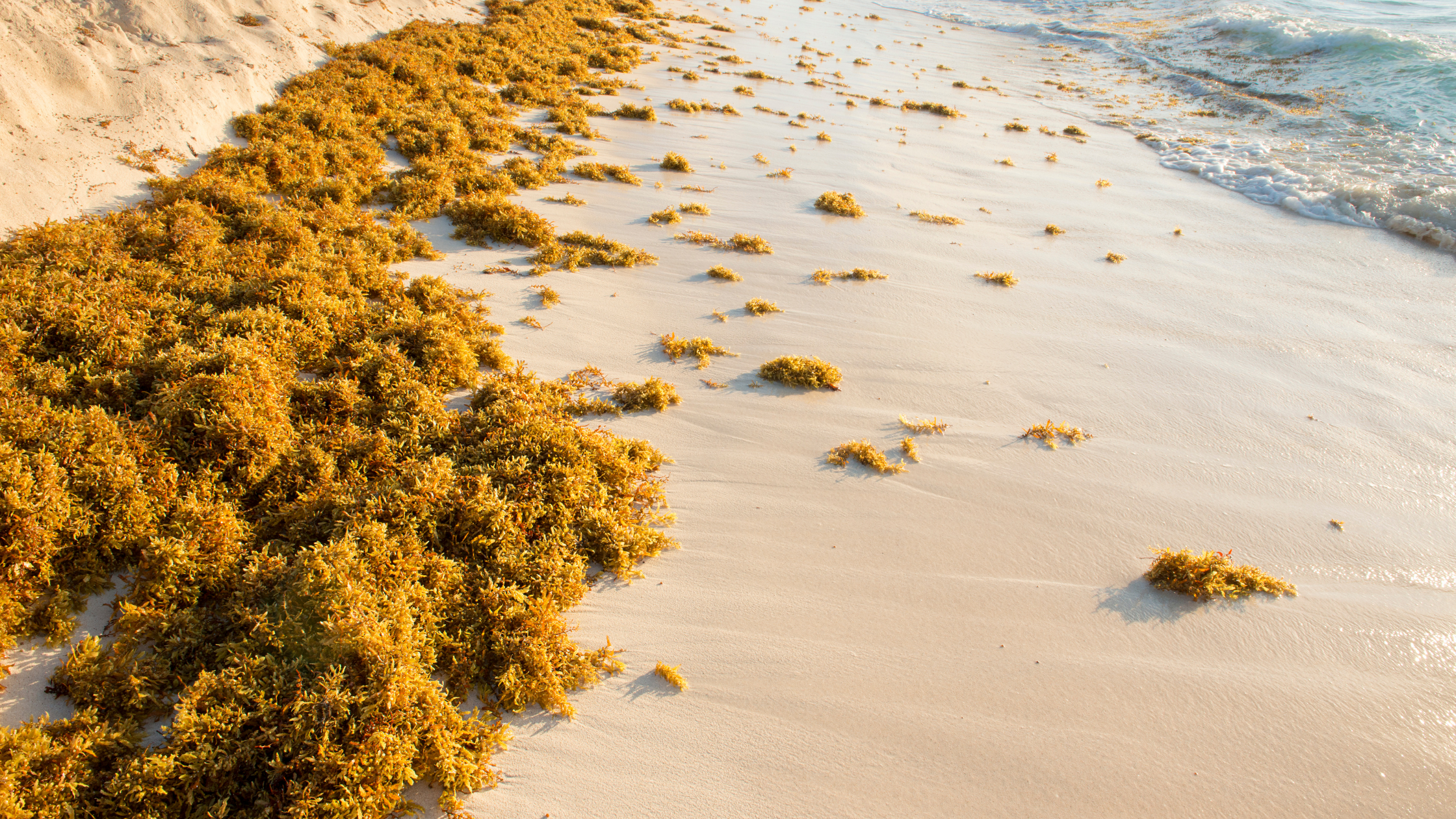
If you've been following Caribbean travel news lately, you've probably seen the photos.
Beaches covered in brown seaweed. Huge piles of sargassum along the shore. People cleaning beaches for hours. And, naturally, if you're planning a trip to the Dominican Republic, you might be wondering: “does Cabarete get sargassum too?”
I get asked this question all the time. And after 12 years of coming to Cabarete and five years of living here full-time, I completely understand why people ask.
The short answer is:
Yes, Cabarete gets sargassum. But my experience is that we usually get much less than some of the more exposed beaches on the east coast of the Dominican Republic.
And that difference can be pretty noticeable. I'm not going to tell you that Cabarete is sargassum-free, because it isn't. Some days you'll see it (but very little and on specific times of the year). Some seasons are worse than others. And sometimes nature does whatever it wants.
But if you're worried about sargassum when choosing where to stay, travel or even buy property in the Dominican Republic, Cabarete and the North Coast are definitely worth considering.
Here's what I've actually noticed living here.
First: what is sargassum?
Sargassum is a type of floating brown seaweed that naturally lives in the Atlantic Ocean.
The problem is that in recent years, enormous amounts of it have been making their way across the Caribbean and washing up on beaches throughout the region.
When it's floating offshore, it's not really a problem. The issue starts when it reaches the beach.
As it sits in the sun and begins to decompose, it can smell pretty unpleasant. It can also cover the sand and make the water look very different from the turquoise Caribbean beach you had pictured in your head.
And yes, I've seen it here. Just a little.
But seeing some sargassum on a beach is very different from dealing with huge accumulations day after day. That's an important distinction.
Why does Punta Cana get so much sargassum?
If you've ever compared beaches in the Dominican Republic, you may have noticed that Punta Cana tends to get much more sargassum than Cabarete and other locations in the DR.
That happens because of geography and ocean conditions.
Punta Cana is on the eastern side of the island, directly exposed to the Atlantic. During periods when large amounts of sargassum are moving toward the Caribbean, that coastline can be particularly exposed.
This is why you'll often see images of beaches in Punta Cana covered in seaweed during the stronger parts of the season.
Now, I want to make one thing clear: that doesn't mean Punta Cana has sargassum every day.
Resorts also do an incredible amount of beach cleaning, so your experience can be very different depending on where you stay and what is happening that particular week.
But generally speaking, the eastern coast is much more exposed.
So why does Cabarete usually get less?
This is where it gets interesting. Cabarete is on the North Coast of the Dominican Republic, and its position means it doesn't generally experience the same level of exposure as the beaches around Punta Cana.
The island's geography, ocean circulation, wind and currents all play a role in where floating sargassum eventually ends up.
And this is one of those things you really notice when you live here. I'll see photos from other parts of the Caribbean, or even other parts of the Dominican Republic, and think that I'm glad I'm in Cabarete.
Because while we can absolutely have days with seaweed, massive accumulations are not what I normally see when I look at the beach.
Is Cabarete completely free of sargassum?
No. And I think it's important to be honest about this.
If you're coming to Cabarete expecting zero seaweed, 365 days a year, you're setting yourself up for disappointment. This is the Caribbean. The ocean does what it wants.
I've seen Cabarete with beautiful, crystal-clear water and almost no seaweed most of the time.
I've seen small patches floating offshore.
I've seen some seaweed washed up on the beach after certain weather and wind conditions.
I've also seen periods when there was noticeably more.
But in my experience, heavy sargassum is the exception rather than my everyday reality.
One thing people forget: every beach is different
This is something I've learned from living here. When people ask: “Does Cabarete have sargassum?”, I almost want to answer: “Which beach?”
Because Cabarete isn't one single beach.
You have Cabarete Bay, Kite Beach, Perla Marina and Encuentro, and they don't always look exactly the same on the same day. And then there is Sosua Beach and Playa Alicia, which stay impeccable all your round.
In the Cabarete area, the wind, waves, currents and orientation of each beach can make a difference.
It is completely possible to have some seaweed on one stretch of beach and much clearer water a little further along the coast.
This is also why I wouldn't make a decision about a trip, or buying property, based on one photo you saw online.
Beach conditions change. Sometimes even within the same day.
What about Kite Beach?
Kite Beach is particularly interesting.
It's famous for its wind, and the conditions that make it such a great kitesurfing destination also mean that the beach can look different depending on the day's wind and waves.
But again, a little sargassum doesn't automatically mean the beach is covered in it.
Most of the time, when people talk about sargassum, they're imagining those enormous piles covering the entire shoreline. This does not happen here….or at least that's not what I typically experience in Cabarete.
What about Encuentro?
Encuentro is another great example of why you shouldn't generalize about the entire area. It's further west and is one of the most popular surfing spots around Cabarete.
The beach is smaller and has its own wave and wind conditions, so what you see there can be different from what you see in Cabarete Bay or Kite Beach.
And if you're a surfer, you probably already know this: the ocean conditions matter a lot more than the calendar.
What about Las Terrenas?
This is where the comparison gets a little more complicated.
Las Terrenas is also on the northern side of the Dominican Republic, but it's located on the Samaná Peninsula, and its coastline has different exposure and conditions.
I've seen absolutely beautiful, clear beaches in Las Terrenas. And I've also seen days where there was considerably more sargassum than what I was seeing around Cabarete. A lot more!!!
Again, it depends on the beach, the weather, the wind, the currents and what's happening offshore.
When is sargassum season in the Dominican Republic?
There isn't a perfect calendar. Unfortunately, it doesn't work like that.
Generally, the main sargassum season is associated with spring through late summer and into fall, but the intensity varies enormously from year to year.
Some years are relatively quiet. Other years can bring much larger amounts of sargassum across the Caribbean.
And even during a strong season, conditions can change from one beach to the next.
This is why I wouldn't choose a destination based solely on the month you're traveling. I'd look at what's actually happening at the destination closer to your trip.
Cabarete vs. Punta Cana vs. Las Terrenas
If you're mainly concerned about sargassum, this is how I would think about the three destinations based on my experience:
Cabarete: usually lower exposure
Kite Beach: usually lower to zero exposure
Sosúa: usually zero exposure
Las Terrenas: more variable
Punta Cana / Bávaro: generally higher exposure
But please don't read this as a guarantee. There is no Dominican beach that comes with a “no sargassum ever” promise. Weather and ocean conditions can change everything.
If you're still deciding between Cabarete, Punta Cana, Las Terrenas, you can also check out Transekur's interactive sargassum guide. It compares different coastal areas throughout the year and can help you get a better idea of what to expect before booking your trip.
Just remember that sargassum conditions can change, so it's always worth checking locally too, maybe through a live webcam!
Does sargassum affect everyday life in Cabarete?
For me? Not very much. It's not something I wake up every morning worrying about, and I live close the Cabarete Beach.
If there's a little seaweed on the beach, I don't suddenly stop going to the beach.
If I'm planning to swim, I look at the water and go to Sosua instead.
If I'm meeting friends for sunset, I'm going to the beach.
If you are going kitesurfing, look at the wind. That's just everyday life here.
And I think that's one of the biggest differences between living somewhere and visiting somewhere for a week.
When you live here, you stop expecting the beach to look exactly the same every single day. Some days the water is unbelievably beautiful. Some days the wind is stronger. Some days the waves are bigger. Some days there is a little seaweed. And then the next day, it's gone.
So, should sargassum stop you from visiting Cabarete?
Personally, no. If sargassum is your main concern when choosing a destination in the Dominican Republic, I would definitely put Cabarete and Sosua on your list.
Especially if you're comparing it with some of the more exposed areas of the east coast. But I wouldn't promise you a completely seaweed-free vacation. That's not realistic anywhere in the Caribbean.
Instead, I'd look at the bigger picture. Cabarete gives you beaches, wind, water sports, restaurants, a very international community and a much more local, active atmosphere than many traditional resort destinations.
And for me, the fact that we generally don't experience the same level of sargassum as Punta Cana is just another advantage.
Want to see the beach before you come?
Don't guess….check it for yourself.
Before booking your trip, or even before heading to the beach for the day, take a look at Cabarete's live beach webcam. You'll be able to see the actual beach conditions in real time, including the water, wind and whether there is any noticeable sargassum.
It’s the easiest way to see what Cabarete looks like right now, not what it looked like in someone’s Instagram photo three months ago. I like to use the Villa Taina Water Club webcam:
👉 Check the Cabarete Live Beach Webcam and see for yourself.
What I've noticed after five years of living in Cabarete
I think one of the reasons people are so worried about sargassum is because the photos can be dramatic. And they are real.
But a photograph of a beach covered in seaweed somewhere in the Caribbean doesn't automatically tell you what is happening in Cabarete today.
I've lived here year-round for five years. I've watched the seasons change. I've watched the wind change. I've watched different beaches look completely different from one another. And I've learned not to panic every time I see a sargassum headline.
Cabarete rarely gets sargassum. And when and if it does, it is not something that defines everyday beach life here.
And if you're thinking about moving to Cabarete... This is actually where the sargassum question becomes a little more interesting.
Because if you're looking at the Dominican Republic as a place to live, you're not choosing based on one vacation week. You're choosing a location where you might spend years.
And suddenly things like:
- How often can I actually enjoy the beach?
- Which side of town should I live on?
- What's the wind like?
- Where are the supermarkets?
- Can I walk everywhere?
- What's the community like?
- How far am I from Sosúa and Puerto Plata?
- Can I work remotely?
- What is everyday life actually like?
become much more important.
And this is one of the reasons I love Cabarete. It's not perfect. No place is. But after 12 years of coming here and five years of actually living here, I know what the good days look like, and I also know what the less-than-perfect days look like. And the good ones are pretty incredible.
So, does Cabarete have sargassum? Yes.
But does Cabarete usually experience the same level of sargassum as Punta Cana? In my experience, no.
Can you guarantee that your beach will be completely clear during your trip? Absolutely not. That's nature.
But if you're looking for a Caribbean destination in the Dominican Republic where sargassum tends to be less of a concern, Cabarete and the North Coast deserve a serious look.
And that's the most honest answer I can give you after living here.
Don't choose your destination because someone promised you a perfect beach. Choose it because you love the place, even when the beach isn't perfect.
And for me, that's Cabarete.
Thinking about moving to Cabarete?
I'm Gio in the D.R., and I've been coming to Cabarete for 12 years and living here for the last five.
I share what it's actually like to live, work, explore and build a life in the Dominican Republic, from the things you see in the travel brochures to the everyday details nobody tells you about.
If you're comparing Cabarete, Sosúa, Las Terrenas or Punta Cana and you're not sure which one fits the lifestyle you're looking for, get in touch.
Sometimes the best way to understand a place is simply to talk to someone who actually lives there.