Buying process4 min read
Dominican Republic Real Estate: Spanish Terms You Need to Know When Buying Property
Learn the Spanish real estate terms you'll actually hear during viewings, negotiations and closing, from deslinde and título to tinaco, cisterna and cuota de mantenimiento.
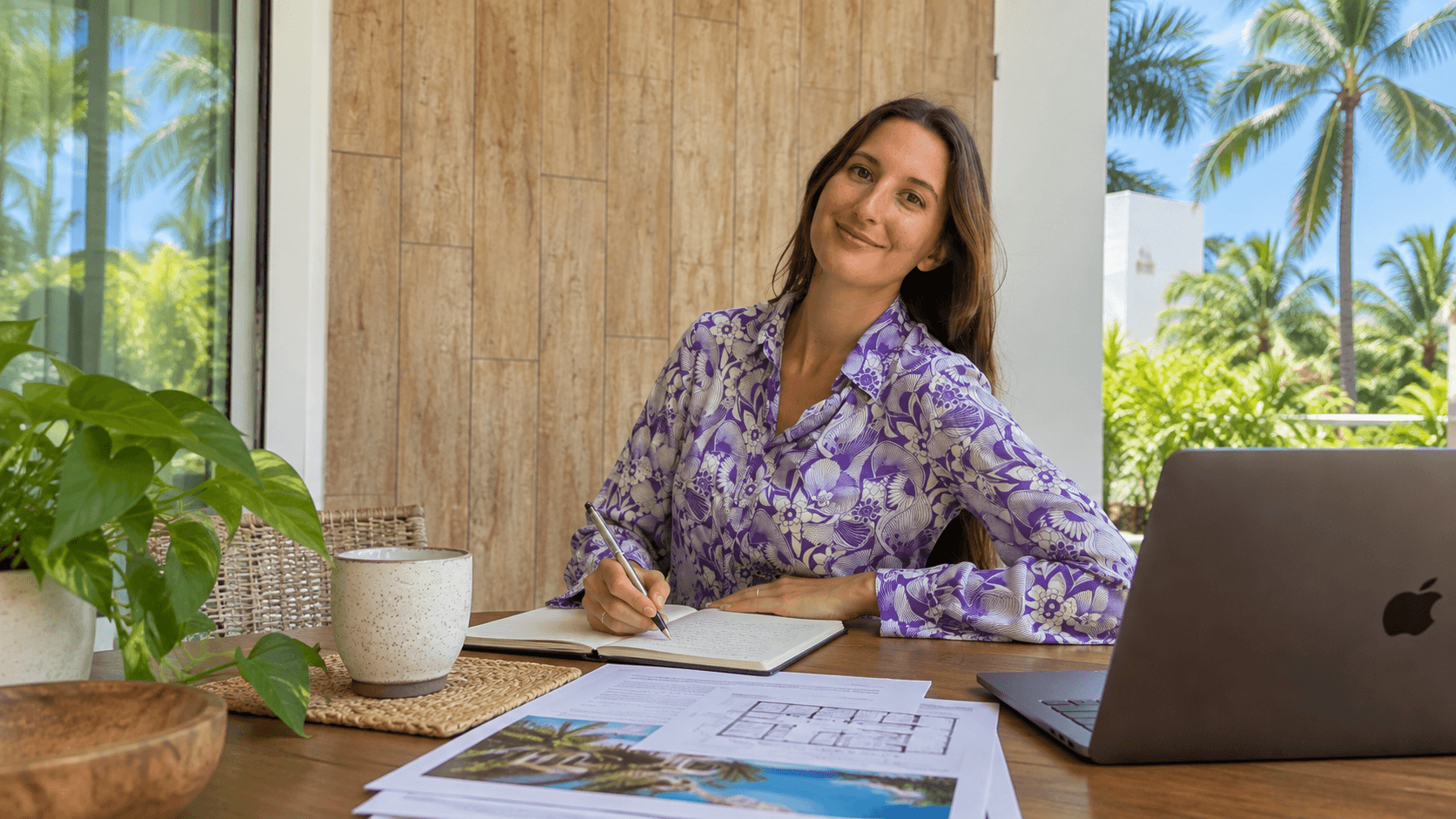
When my family first started coming to Cabarete, none of us spoke Spanish or English.
We still managed to find a property we loved, but looking back, I realize that knowing even a few basic real estate terms would have made the process much easier. We would have understood conversations about ownership, maintenance costs, utilities and neighborhoods instead of constantly asking someone to translate.
If you're buying property in the Dominican Republic, you don't need to become fluent in Spanish. But understanding the words you'll hear during property viewings and closing will help you feel much more confident.
These are the terms I find myself using with buyers almost every week.
Property & ownership terms
These are probably the most important words you'll hear during the buying process.
Título de propiedad → Proof of legal ownership (property title).
Deslinde → A surveyed property with clearly defined legal boundaries. One of the first things your lawyer will verify.
Contrato de compraventa → Purchase and sale agreement.
Impuesto de transferencia → The real estate transfer tax paid at closing (unless exempt, such as certain CONFOTUR properties).
Notaría → The notary involved in preparing and certifying legal documents.
Abogado → Lawyer
Condo & HOA vocabulary
If you're buying a condo, these words will come up constantly.
Condominio → Condominium
Cuota de mantenimiento → HOA fee
Áreas comunes → Common areas
Administración → Property management / HOA administration
Fondo de reserva → Reserve fund
Ascensor → Elevator
Seguridad 24 horas → 24-hour security
Example: “¿Cuál es la cuota de mantenimiento?”
What's the monthly HOA fee?
Utilities you'll hear during a viewing or after you buy
Cisterna
A large underground water storage tank. Most homes and many condominiums in Cabarete have one because public water can occasionally be interrupted.
Tinaco
A rooftop water tank. Think of it as the property's emergency water reserve. Old school but useful for a single home.
Bomba de agua
Water pump. It moves water from the cistern to the property.
Planta eléctrica
Backup generator. This is an important question to ask, especially if you work remotely.
Inversor
Battery backup system. Unlike a generator, it powers essential appliances during shorter outages.
Rooms & property features
Habitación → Bedroom
Baño → Bathroom
Terraza → Terrace
Balcón → Balcony
Sala → Living room
Comedor → Dining room
Cocina abierta → Open-plan kitchen
Parqueo → Parking space
Depósito / almacén → Storage locker
If you're buying in Cabarete, depósito is a great feature, it usually means extra space for surfboards, kitesurfing gear or bicycles.
Location words that matter
These aren't literal translations, they're words that tell you a lot about the property's setting.
- Frente al mar → Beachfront
- Vista al mar → Ocean view
- A pasos de la playa → Steps from the beach
- Comunidad cerrada → Gated community
- Residencial → Residential community
- Primera línea de playa → First line / directly on the beach
There's a big difference between vista al mar (you can see the ocean) and frente al mar (you're directly on it).
Negotiation terms
When it's time to make an offer, you'll probably hear or read these:
Oferta → Offer
Precio negociable → Negotiable price
Inicial → Down payment
Pago en cuotas → Installment payments
Amueblado → Furnished
Sin amueblar → Unfurnished
For example: “¿El apartamento se vende amueblado?”
Is the apartment being sold furnished?
My favorite Dominican phrase
One expression you'll hear everywhere (and it applies to evethything) is:
“Vamos ahora.” Literally, it means “Let's go now. / On our way.”
In reality… it can mean right now, in five minutes, later today, or we're working on it.
Living in the Dominican Republic has definitely taught me patience, and understanding little cultural expressions like this is almost as important as learning the legal vocabulary.
You don't need perfect Spanish
The truth is, you can buy property in Cabarete while speaking very little Spanish or none at all. Many agents, lawyers and professionals work in English and other languages every day. But knowing these terms helps you:
- Understand property viewings (if in Spanish)
- Feel more confident during negotiations
- Follow conversations with your lawyer
- Read HOA documents more easily
- Communicate better with local professionals
And, it's also a sign of respect for the country you're choosing to invest in.
Download my Cabarete Buyer's Guide
If you're planning to buy property on the North Coast, I've put together a free downloadable Buyer's Guide covering the complete buying process, closing costs, HOA fees, neighborhood & more helpful info for first-time buyers.
Thinking about buying in Cabarete?
I'm Gio in the DR, and I help international buyers find the right property, compare neighborhoods and understand the real costs of owning a home in the Dominican Republic.
Get in touch and tell me what you're looking for, no matter if you're just starting your search or already planning your next trip to Cabarete., no matter if you're just starting your search or already planning your next trip to Cabarete.you're just starting your search or already planning your next trip to Cabarete.
info@giointhedr.com
WhatsApp / Phone call +1-809-299-4917