Living here10 min read
Living in Cabarete: Water, Electricity & Utilities Explained
Moving to Cabarete? Learn about water, electricity, internet, gas and everyday utility costs, with practical tips from a local resident.
If you're thinking about moving to Cabarete, you've probably researched the beaches, restaurants, neighborhoods and real estate.
But there are some very practical questions that don't always come up until you're actually living here:
What happens when the electricity goes out? Where does the water come from? How much does internet cost? Do you need a backup system? And what should you actually budget for utilities?
I've lived in Cabarete for five years, after coming here for more than a decade, and these are things I've learned through everyday life, including the occasional electricity or water interruption.
The good news is that living with utilities in Cabarete is generally very manageable once you understand how the system works and plan accordingly.
Water in Cabarete
Cabarete is connected to the municipal water system operated by CORAAPPLATA, the regional water authority.
However, water service can be intermittent in parts of the area, which is why water storage is such an important part of residential life here.
Many homes and buildings use some combination of:
- Cisterns
- Tinacos (water storage tanks)
- Pumps
- Private wells
- Municipal water
- Water trucks when necessary
This sounds more complicated than it actually is once you're used to it.
How does water storage work?
At my place, we use a cistern and pump, together with a tinaco as an additional backup.
I don't normally have to think about it every day, but I definitely appreciate having water storage when the municipal supply is interrupted.
I only experience being without water once or twice a year, usually when there has also been an electricity interruption affecting the system, so no electricity = not water, unless you have a back up generator (all gated communities and condominiums do, so you won’t experience this issue).
Some residential developments and hotels have their own pozos (wells), which can provide a more consistent supply.
So when you're looking at a property in Cabarete, don't just ask whether the property has water. Ask how the water system actually works.
Is there a cistern?
Is there a tinaco?
Is there a private well?
What happens if the municipal supply is interrupted?
These are the practical questions that matter.
Can you drink the tap water in Cabarete?
NO, don't drink the tap water.
For drinking and usually for coffee, I use purified bottled water. Large refillable bottles are very common here and are an easy solution.
Some people choose to install a water filtration system instead.
For cooking, I use purified water as well (most of the times), although you'll find different approaches among people who live here.
If you're moving to Cabarete, it's something you'll quickly figure out based on your home and personal preferences.
Electricity in Cabarete
Electricity in Cabarete is provided by Edenorte, the regional electricity company. And this is probably the utility that surprises newcomers the most.
Electricity interruptions do happen.
Sometimes they're planned maintenance interruptions and last a short time. Other times they can last a few hours.
But here's the important part: most properties have backup power.
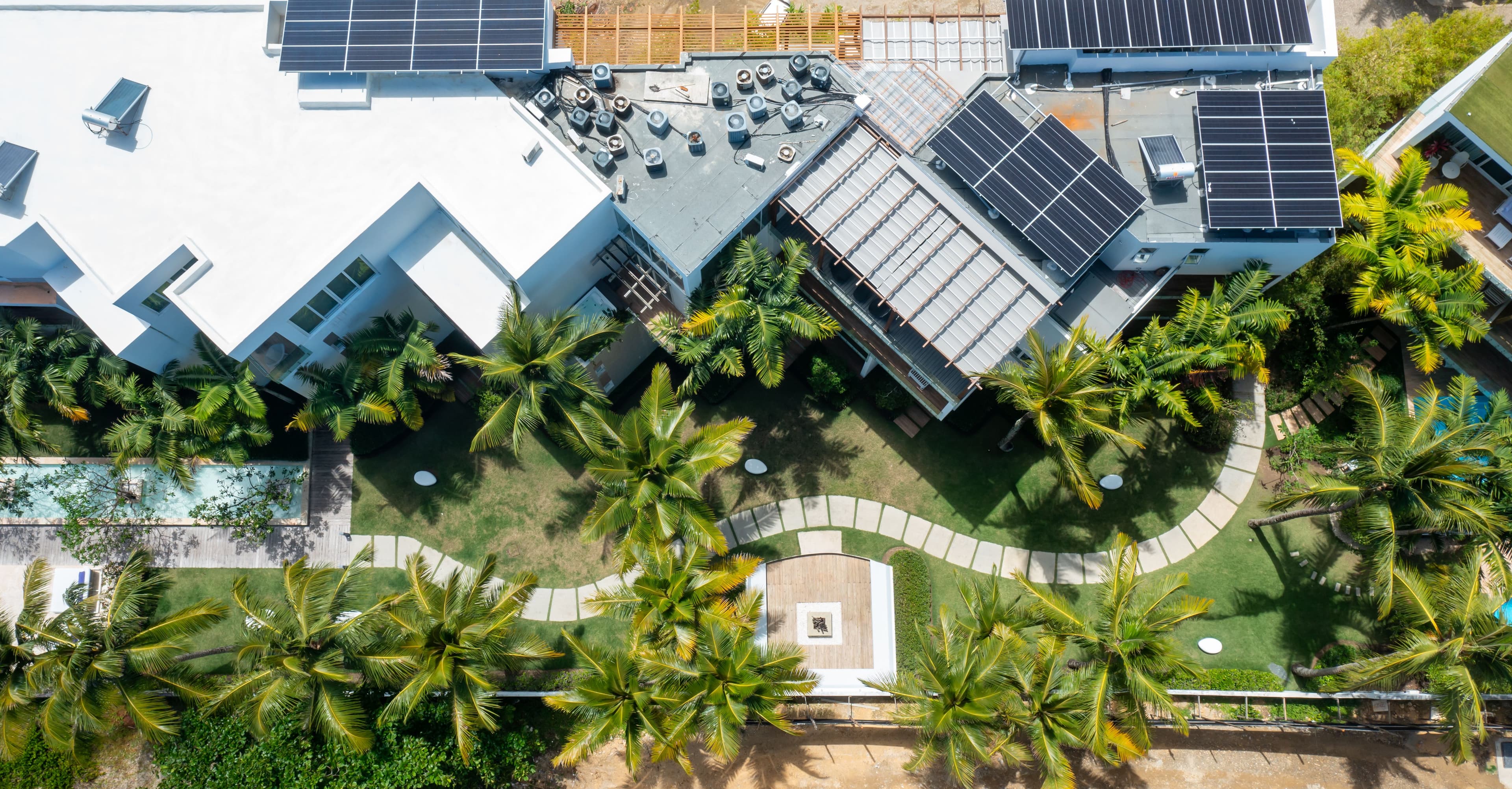
In gated communities and newer developments, you may find generators, inverters or other backup systems.
When the backup system works, you might barely notice that the electricity has gone out.
What happens when my electricity goes out?
I don't currently have a backup power system at home, although I'm considering installing batteries/inverter in the near future.
So when I have an interruption and need to work, I simply adapt.
I'll go to the office, work from a café with electricity, or go somewhere else where I have access to backup power. (This is just me, but I’d rather have a back up generator like the neighboring communities!! )
It's not ideal, but after living here for a while, you stop treating every interruption like a disaster.
You just have a plan B.
And honestly, that's one of the biggest lessons of living in the Dominican Republic: things don't always work exactly according to plan, so having a backup option makes life much easier.
How much does electricity cost in Cabarete?
This varies considerably depending on the property, size and, most importantly, how much you use air conditioning.
For my one-bedroom home, I spend around RD$2,000–3,000 per month, or approximately US$35–50.
But this can be much higher in other properties.
From my experience managing rentals and properties in Cabarete, I've seen one-bedroom apartments using around US$50–120 per month, while a two-bedroom property can easily reach US$200+ depending on usage/rentals/season.
These aren't fixed rates, they're examples of what consumption can look like. And air conditioning makes a big difference.
Air conditioning: the big electricity variable
Living in the Caribbean means you're going to think about air conditioning differently than you might in Europe. Not you Americans, though… I know you love your AC. ;)
I personally tend to use AC in the afternoon, and more during the hottest months when I may use it into the evening.
At night, I usually prefer a ceiling fan. But this is completely personal.
If you're someone who wants the AC running all day and all night, your electricity bill will reflect that.
And for beachfront or properties close to the ocean, AC can be particularly useful because it helps manage the heat and humidity inside the home.
If you're buying a property in Cabarete, I would always ask about previous electricity consumption rather than trying to estimate it from the size of the apartment alone, if possible.
Internet in Cabarete
This is one area where I've personally been positively surprised.
I use Cable del Norte, with a 50 Mbps plan that includes cable TV, and I pay around RD$2,200 per month, approximately US$35–37.
For working remotely, I find it very good most of the time.
I regularly work from my computer, have video calls and create content, and internet reliability hasn't been a major problem for me.
Of course, interruptions occasionally happen. That's why I also keep mobile data as a backup.
Mobile data
I use Claro, and my plan includes around 27 GB of data for approximately RD$1,800 per month, about US$31.
Mobile coverage around Cabarete is generally very good, which gives me another backup option if I need to work and my home internet isn't cooperating.
Between home internet and mobile data, I've found working remotely here quite easy.
Gas vs. electric cooking
Traditionally, gas cooking has been very common in Dominican homes. I use a gas tank at home.
When it's empty, you can either take it to be refilled yourself or arrange for a moto to pick it up and bring it back. If you use a delivery service, always ask for your payment receipt.
I generally refill mine around once every three months.
Gas is relatively inexpensive, although it requires a little more effort than simply plugging something in.
At the same time, more and more new developments are being built with all-electric kitchens, so this is something you'll increasingly encounter when looking at new construction.
Garbage collection
Garbage collection works differently depending on where you live.
Where I live, we pay a private person to collect the garbage once a week, at a cost of around US$30 per month.
In gated communities, garbage collection and other services may be handled through the HOA instead, so you don’t have to worry about it.
I'll cover HOA fees and what they actually pay for in a separate guide because there is quite a lot to explain.
What about recycling?
This is one area where I think the Dominican Republic still has room for improvement.
At the moment, recycling isn't something I personally have an easy system for at home. There isn’t one available.
There are local initiatives working on solutions, particularly around plastic, and I'll cover some of those in a separate article.
I think it's worth being honest about this rather than pretending that everything here works exactly like it does in Europe or other parts of the world.
If sustainability is important to you, stay tuned! I'll be sharing more about what's happening locally over the next few months.
How much should you budget for utilities in Cabarete?
Here's a rough example based on my own current situation (monthly utilities only):
Electricity ➝ US$35–50
Drinking water ➝ ~US$30
Internet + cable ➝ US$35–37
Mobile phone ➝ ~US$35
Gas (for cooking) ➝ ~US$5
Garbage collection (shared cost) ➝ ~US$30
Approximate total ➝ US$150–175/month
There is one important detail: my daily-use water is included in my HOA, so the US$30 above is for drinking water and not my water consumption at home.
Your costs can be significantly different depending on your property, electricity consumption, AC use and what your HOA includes.
This is why I don't like giving people one generic “cost of utilities in Cabarete.”
This is a pretty low monthly budget compared to most. Your lifestyle and your property make a big difference.
Do gated communities have different utility costs?
Yes. This is something you'll notice when comparing properties.
Many gated communities and residential developments include additional services through the HOA.
Depending on the community, this might include things such as:
- Water
- Garbage collection
- Security
- Common-area electricity
- Garden maintenance
- Pool maintenance
- Backup power
- Other shared services
The HOA fee may therefore be higher, but you're also paying for more.
This is something I'll go into in more detail in my upcoming guide to HOA fees in Cabarete, Dominican Republic, because understanding exactly what you're paying for is important when buying property here.
What should you ask before renting or buying?
If you're looking at a property in Cabarete, don't just ask: “How much is the electricity?”
Ask:
Water
- Is the property connected to municipal water?
- Is there a cistern?
- Is there a tinaco?
- Is there a private well?
- Is water included in the HOA?
- What happens during an interruption?
Electricity
- Which provider supplies the property?
- Does the building have backup power?
- Is there an inverter or generator?
- What's the typical monthly consumption?
- How much does the previous owner or tenant spend?
Internet
- Which providers are available?
- What speeds are available?
- Is fiber available?
- Is there a backup option?
HOA
- What exactly is included?
- Is water included?
- Is garbage collection included?
- Is backup power included?
- What additional services are paid separately?
These questions can save you from a lot of surprises later.
Is living with utilities in Cabarete difficult?
Honestly, no. It just works a little differently.
You learn to keep drinking water at home.
You understand how your cistern and pump work.
You know what to do when the electricity goes out.
You have mobile data as a backup.
And if something doesn't work, you figure out Plan B.
After five years, these things don't feel particularly unusual to me anymore. They're just part of living here.
And I think that's the key to moving to the Dominican Republic in general: you don't need everything to work exactly the way it did at home. You need to be comfortable adapting.
Thinking about moving to Cabarete?
Utilities aren't usually the reason people fall in love with Cabarete. But understanding them before you move or buy can make your transition much easier.
If you're renting or buying, ask questions about water, electricity, internet, backup power and HOA fees before making a decision.
And if you're looking to buy a property, don't hesitate to ask me about the practical details.
I've lived here long enough to know that the small questions often matter just as much as the big ones.